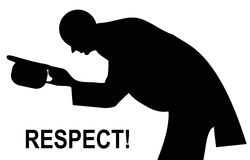
My generation (Korean and otherwise) carries a pretty strong sense of elder respect. So David and I were surprised that he had trouble applying this to Korean settings. I knew we were stepping in major steaming piles when David’s meet-and-greets with elder Koreans* went something like this:
David: (With his typically booming voice, hearty handshake, and direct eye contact)
Hello, it’s a pleasure to meet you!
Elder Korean: (Slight wince as he nods, makes brief eye contact, and recovers his bruised hand) Hello.
David: (Smiles wide as he continues eye contact with relaxed stance, gesturing with hands)
So, I hear that you knew Debbie’s parents.
Elder: (Frowns as he leans slightly away, crossing his arms)
(Grunting noise). Yes.
David: It sounds like you have a close community. My childhood in Minneapolis was like that. In fact, I remember when….
Elder: … (Refuses further eye contact. Glares at ground with constipated look on face)
After each of these painful encounters, I gently encouraged David to please behave in a more respectful manner. Which invariably led to this type of conversation:
David: I know how to respect elders. My parents taught me to be respectful.
Me: Yes, but it’s different for a Korean–
David: Are you saying that my parents didn’t raise me right?
Me: Well.
David: What?
Me: “Didn’t raise me well.” You need an adverb, not an … Never mind. The point is–
David: I know what to do: Stand up straight, say “sir” or “ma’am,” look a person in the eye, give a firm handshake–
Me: Uh, it’s better to bow and then–
David: Let them sit in the nice recliner, use polite language, listen more than you talk but also keep up your end of the conversation —
Me: No, no. Don’t talk. Just nod your head (At this point I usually nodded my head to demonstrate).
David: Why can’t I talk? And why are you bobbing your head like that?
We eventually got off of that bobble-head merry-go-round, and simply agreed that we had a disconnect between David’s and my idea of “respect.”
Side note: Let me pause to admit some embarrassment that we, being an interracial couple, did not anticipate these cross-cultural issues. It seems so basic and common sensical in retrospect, yet we really struggled at every step of this journey.
So stumbling on as best as we could, we did what I typically do in difficult situations, and which brings us to the second big lesson learned: Make a List.
Yes, I’m serious. We noted observations, questions, points of confusion… In other words, we studied the problem and tested out solutions in social settings. Believe me, the last thing you want to do with elder Koreans is to shrug your shoulders and say, “Eh, it’ll all work itself out.” I can say this with confidence because we also tried that route, and it did not just “work itself out.”
Thus the list of what to do and what to say to an elder Korean. And perhaps more importantly, what NOT to do and what NOT to say, such as:
• Don’t make extensive eye contact with your elders
• Don’t offer to shake hands. Bow first, then shake hands if the elder offers
• Bow at a 30-45 degree angle, depending on how well you know the elder
• Don’t gesture or take up a lot of space (keep your arms at your sides or folded in front of you)
• Do speak quietly (don’t use your “Minneapolis Party Guy Having a Good Time” voice)
• Do not smile too much. “Stoic” is good. In fact, try to imitate Mr. Spock’s facial expressions (excluding the lifted eyebrow)
• And for God’s sake, don’t tell any stories or jokes!
The list came in handy. A dinner invitation extended by an elder Korean meant that we quickly whipped out the rules. Then we spent a tension-filled drive to the restaurant, as David and I frantically recalled the “do/don’t” bullet points. The car conversation usually went like this:
Debbie: Can you recite the list?
David: Let’s see … no prolonged eye contact, don’t shake hands at first, instead bow 30-45 degrees, don’t gesture with my chopsticks, breathe quietly… what else?
Debbie: Ask questions, and answer briefly. And for the love of all that is good and holy, do NOT tell any stories or jokes. You’re not ready for that advanced level yet.
David: Hmm… but I have a great story from when my grandfather was preaching, and one of the parishioners fell asleep, and he made the loudest —
Debbie: NO!!! No. You know what? Scrap the list. Don’t talk at all. In fact, let’s turn the car around and go back home. I’m starting to feel ill.
Ok, so we never actually turned the car around. No one in their right mind turns down Korean BBQ.
And what of the list of “Respect Dos and Don’ts?” Over time, it grew. And grew. Until it became the manuscript that I will someday edit and unleash onto the innocent and unsuspecting. But for David, I hoped for something simpler, that didn’t require hours of study. Perhaps a single thought or guiding principle that he could ingest like a magical pill, or put on like a special pair of Korean-Respect goggles. These awesome-special goggles would change his very perception of “respect,” so that his behaviors would just fall into place accordingly. Ah, Costco, here is yet another item for you to stock on your shelves!
 Decoding My Korean Way